Currently Empty: $0.00
Why Home EV Charging Is Essential for Electric Bike Owners.
Electric bikes (e-bikes) have exploded in popularity, offering eco-friendly commuting, fitness boosts, and urban adventures. But keeping your battery topped up is key to hassle-free riding. Home EV charging for electric bikes beats public stations hands down—it’s cheaper (often 50-70% less per kWh), always available, and gentler on your battery.
- Convenience: Plug in after your ride; no hunting for spots.
- Cost savings: Home electricity averages ₹6-8/kWh in India vs. ₹15+ at stations.
- Battery longevity: Steady, controlled charging preserves capacity over 500+ cycles.
- No downtime: Overnight charges mean your e-bike is ride-ready by morning.
Public chargers work for EVs, but e-bikes thrive on home setups. Invest in the right electric bike charger, and you’ll avoid frustration.
Electric Bike Batteries: The Foundation of Smart Charging
Understand your battery to pick the perfect charger. Most e-bikes use lithium-ion (Li-ion) packs for their high energy density (150-250 Wh/kg) and 2,000+ charge cycles.
Common Battery Types
- Lithium-ion (Li-ion): Dominant in 95% of modern e-bikes (e.g., 36V 10Ah packs). Lightweight (2-4 kg), 80-90% efficient.
- Lithium iron phosphate (LiFePO4): Safer, more stable for hot climates like India’s summers.
- Lead-acid (legacy): Heavier, shorter life—avoid if upgrading.
Battery capacity (Ah or Wh) dictates needs: A 48V 13Ah (624Wh) pack powers 50-80 km per charge.
Pro Tip: Check your e-bike manual for nominal voltage (36V, 48V, 52V, 72V) and max charge current (e.g., 2A standard, 5A fast).
How E-Bike Chargers Work: AC to DC Magic
An electric bike charger is a smart power converter. Household AC (220-240V in India) gets transformed to DC for your battery, with built-in regulation to prevent spikes.
- Process: AC input → Rectifier (AC to pulsating DC) → Voltage regulator → Battery-safe DC output.
- Key specs: Output like 54.6V 2A for a 48V battery.
Analogy: It’s like a universal adapter for power—mismatches fry circuits.
Types of Home Chargers for Electric Bikes
Choose based on speed, smarts, and budget (₹1,500-₹10,000).
| Type | Charging Time (for 48V 10Ah) | Pros | Cons | Best For |
| Standard | 6-8 hours | Affordable (₹1,500+), reliable | Slower | Overnight use |
| Fast | 2-4 hours | Quick boosts | Generates heat, shortens life if overused | Occasional urgency |
| Smart | 5-7 hours | Auto cut-off, app monitoring, cell balancing | Pricier (₹4,000+) | Daily riders, longevity |
SEO Pick: Brands like Deltran Battery Tender or Grin Technologies offer India-compatible smart chargers.
Voltage, Amperage, and Compatibility: Avoid Costly Mistakes
- Voltage match: Charger output must be 4.2V per cell (e.g., 42V for 36V nominal). Mismatch = fire risk.
- Amperage (A): 0.5C rule—e.g., 5A max for 10Ah battery. Higher = faster but hotter (keep under 45°C).
- Connectors: Common types include XT60, barrel (5.5×2.1mm), Anderson Powerpole. Use adapters only if rated.
Quick Check: Voltage on label? Amps too high? Wrong plug? Pass.
Must-Have Safety Features in E-Bike Chargers
Prioritize UL/CE-certified models:
- Over/under-voltage protection
- Short-circuit and reverse polarity safeguards
- Thermal sensors (auto-shutoff >60°C)
- Fan cooling for fast chargers
In humid Delhi weather, IP65-rated (dust/waterproof) is ideal.
Energy Efficiency, Costs, and Setup Tips
Efficient chargers (85-95% rating) minimize waste—saving ₹200-500/year on a daily rider.
India Cost Example (48V 10Ah, ₹7/kWh):
- Full charge: ~0.7 kWh = ₹5.
- Annual (365 charges): ₹1,825 vs. ₹3,650 at stations.
Indoor Setup: Garage outlet with surge protector.
Outdoor: IP67 charger + GFCI socket. Never in rain.
Realistic Charging Times and Factors
| Battery Size | Standard (2A) | Fast (5A) |
| 36V 10Ah | 5-6 hrs | 2-3 hrs |
| 48V 14Ah | 7-9 hrs | 3-4 hrs |
| 52V 20Ah | 10-12 hrs | 4-6 hrs |
Factors: 20% state-of-charge start = 80% faster; degraded batteries add 20-30%.
Top Mistakes and How to Dodge Them
- Cheap no-names: Skip; they lack protection (opt for OEM like Hero Lectro).
- Voltage ignore: Damages in one use.
- Daily fast charging: Limits life by 20-30%.
- Poor ventilation: Heat buildup = swelling.
Charger Maintenance for 5+ Years of Use
- Dust vents monthly.
- Coil cables loosely.
- Store at 20-25°C, 50% humidity.
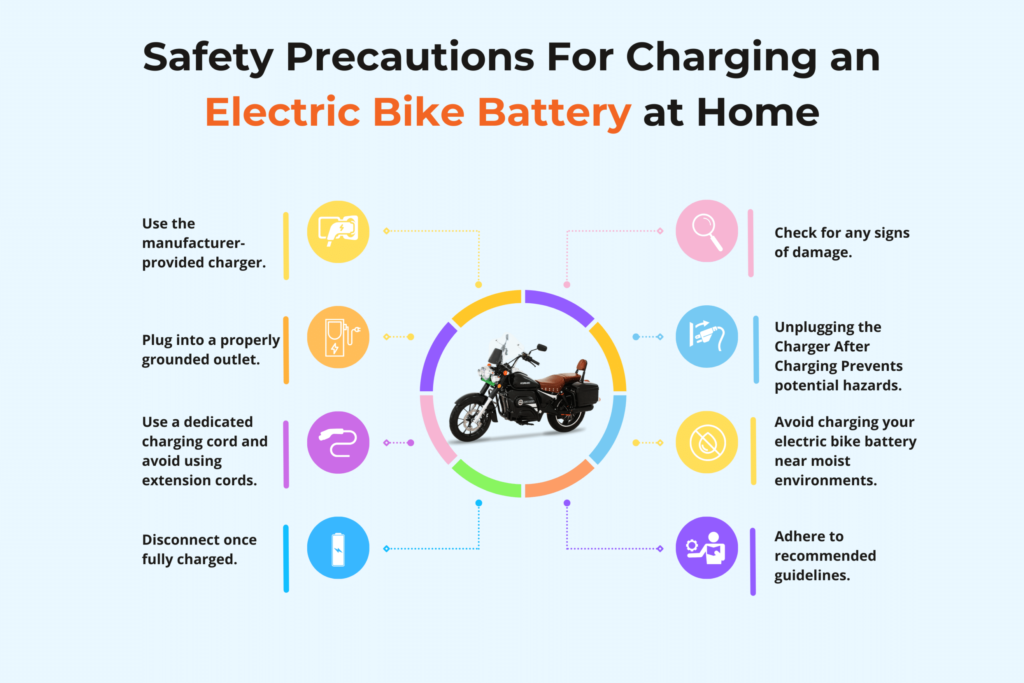
- Unplug post-charge (drips 1-2W idle).
Future-Proof Your Setup
Go modular: Multi-voltage (36-72V) or app-enabled (Bluetooth for charge logs). Prep for 2027 e-bike standards with 60V+ packs.
Conclusion
The best home EV charger for your electric bike balances compatibility, safety, and smarts—unlocking reliable rides and savings. Match specs, prioritize quality, and charge smart. Your e-bike’s freedom starts at home.
Frequently Asked Questions (FAQs)
- Can I use a car EV charger for my electric bike?
No—voltages differ (e-bikes max 72V vs. 400V+). Stick to e-bike specifics. - Is fast charging bad for electric bike batteries?
Occasional yes; daily no—stick to 20% of charges to maintain 80% capacity after 1,000 cycles. - Can I leave my e-bike charging overnight?
Yes, with smart chargers’ auto cut-off. Monitor first few times. - How long do e-bike chargers last?
3-5 years with care; replace if output drops 10%. - Do I unplug after charging?
Absolutely—prevents vampire drain and fire risks.